On the evening of October 8, CAFA Affiliated High School hosted a special screening of Once Upon a Time in the Middle East, followed by an in-person discussion with the film’s creative team. This was the team’s first campus screening event since the film was announced as China’s mainland entry for Best International Feature Film at the 99th Academy Awards. Director and screenwriter Wen Muye, cinematographer Wang Boxue, production designer Li Miao, costume and makeup designer Li Zhou, editor Liu Jinghao, and original music composer Huang Chao were all present. The discussion was moderated by Fang Ling.
On screen, a meal shared amid the ravages of war reveals the preciousness of peace. Off screen, a pencil in an art studio embodies the passion of young artists at CAFA Affiliated High School. During the discussion, the filmmakers reflected on their original intentions and creative experiences, repeatedly returning to one central word: passion.
Many members of the team had studied art before entering the film industry. Driven by their love of art, they moved from drawing boards to film sets; through their passion, they sought to preserve a glimmer of humanity amid stories of war; and through collaboration, they brought out the best in one another.
For the students, watching a film about a Chinese restaurant caught in a war zone and hearing its creators explain how they brought a dining table, individual characters, and a kitchen to life was more than an introduction to filmmaking. It was also a vivid lesson in values and civic education, connecting artistic practice with the warmth of everyday life and a deeper sense of responsibility toward humanity and country.
The Creative Team Shares Insights with Students
Wen Muye, Director and Screenwriter

“I have never deliberately tried to define a particular aesthetic direction. My work comes more from how I feel about people and the world—something almost instinctive.
“I first conceived this story in 2017. The project was put on hold and then revived several times, and it took seven or eight years to reach this point. What I remember most vividly is waiting for the film to finally be ready for release. During filming, I fell off my bicycle and fractured my collarbone, but I went back to work that same day. It wasn't about forcing myself to endure hardship. At the heart of it was our love for what we were doing. The hard work and sacrifices were part of what we had to take on ourselves.
“When portraying a foreign setting, I don't think there is such a thing as absolute authenticity. What we have are individual perceptions of reality. In creating the story, I followed the characters themselves. If I were Zaid and my loved ones had been killed, how would I feel? I could only follow that line of thought and understand as much as I could from that perspective.
“Xu Fu is a morally complex character, but one whose nature leans toward goodness. He lives with guilt for the next twenty years. When he finally breaks down in tears, it is an extreme form of self-reproach—not simply sadness, or even longing, but self-condemnation. I believe that everyone has an underlying goodness. When good people end up doing bad things, it is often the circumstances around them that lead them there.”
Wang Boxue, Cinematographer

“I studied painting in high school. It was your alumnus Xiao Yang who suggested that I apply to the cinematography department of a film academy.
“I watched the film hundreds of times during post-production, examining every frame. From the outset, the director and I agreed on a narrative approach that would immerse viewers in a convincing, lived-in reality. The screenplay is the source of all creative work. As long as you understand it and bring your own emotions and feelings to that understanding, you have a foundation to work from.
“On set, communication ultimately has to follow the director's vision. Everyone has a different understanding of life, but a film needs a clear creative direction, and the director is the person responsible for establishing it. The biggest difference between filmmaking and the fine arts is that an artwork can be created by one person, whereas a film necessarily depends on collaboration.”
Li Miao, Production Designer
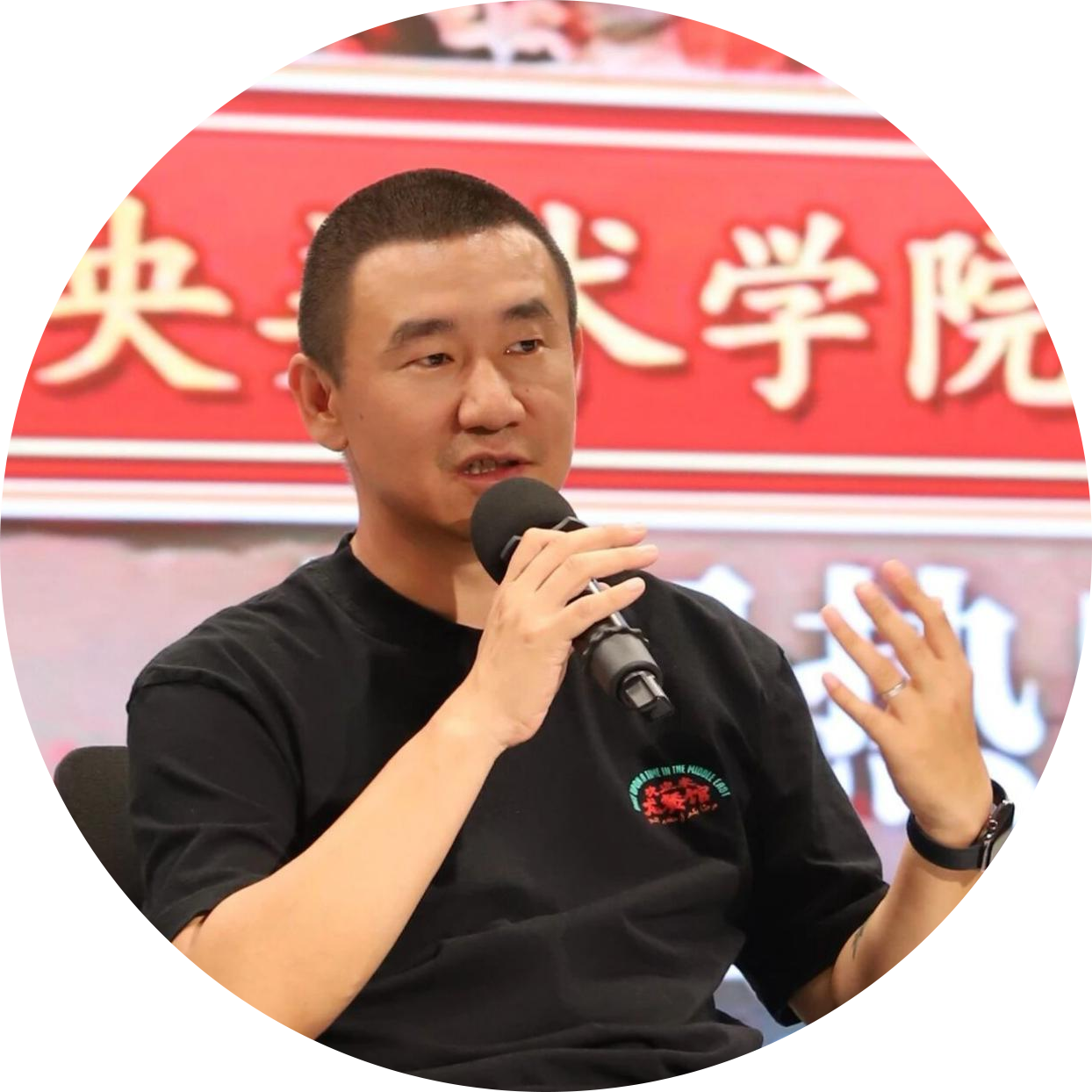
“I studied painting throughout middle and high school. After watching many Hong Kong films, I decided to pursue a career in film production design.
“The most exciting moment came when I first saw the fully color-graded version of the film. During production, watching a film take shape is a little like looking at an ultrasound image of an unborn child: you keep imagining what it will become, whether you are looking at design drawings or the sets as they are built. Seeing the finished film for the first time is incredibly moving.
“In the Christmas Eve passageway scene, we deliberately created a strong visual contrast. At first, the space is lavishly decorated with Christmas lights. After gunshots ring out, the lights shatter, smoke fills the air, and the colors are swallowed up. This works in counterpoint with the music, creating a contrast between image and sound. It is a fundamental cinematic technique.
“Production design is about constructing a world. You can shape that world in one way or another, and the process is truly fascinating and full of possibilities.”
Li Zhou, Costume and Makeup Designer

“I graduated from the Stage Design and Costume program at the Central Academy of Drama. My art education gave me an aesthetic foundation, trained my eye, and taught me to observe people closely.
“One of the greatest challenges was creating a convincing overall portrait of Iraqi society. We had to build distinct social environments and populate each setting with believable people so that viewers could feel immersed in the world of the film.
“The part I enjoyed most was makeup testing. It was wonderful to see an analysis on paper gradually turn into a living, breathing character.
“I worked out Saif's four hairstyles in great detail. His long hair when he first appears, marked by cigarette burns, suggests a rebellious orphan who seems to need taming. After his mentor cuts it short, the soft, close-cropped look conveys a different emotional state. When he returns from prison, his disheveled hair reflects how badly things have gone. Finally, his hair is shaved short, symbolizing the loss of freedom, humanity, and everything he once had.
“Realism does not mean applying a uniform visual standard to everything. It requires a deep understanding of literature and the screenplay.”
Liu Jinghao, Editor

“For me, art is both a source of happiness and a source of pain. I studied Digital Media Art at university. I wasn't good at drawing by hand, so I used Photoshop to create images instead. Every time I saw a finished piece, I felt happy because I had found a way to express my feelings through images.
“One of my most memorable experiences came after the film's release, when I saw audiences creating their own works inspired by it. We had painfully cut many small moments involving supporting characters, but then I discovered that viewers still understood the essence of those characters. Their interpretations and creative responses went beyond the screenplay, and I found that deeply moving. It felt as though the souls of the scenes we had cut away had somehow found their way back into the film.
“When deciding whether to keep an improvised performance, I look for naturalness and emotional impact. Sometimes, when reviewing the footage, I don't even realize that a moment was improvised. For example, Ma Junsheng's remark about potatoes sprouting was improvised, as was Xu Fu's contemptuous little expression in the air-raid shelter. Watching these moments repeatedly helps me decide whether they truly work.”
Huang Chao, Original Music Composer

“I began learning sketching when I was eight or nine, and my first dream was to become a painter. I eventually found myself choosing music over visual art, after wavering between the two for a while. I have always loved working with visual artists and enjoy making friends with people who paint.
“The scene in which Saif loses his sight was particularly memorable. I was already moved to tears when I read the screenplay, and I began writing music in response to the scene. Some of that music ultimately made it into the finished film.
“Some track titles on the original soundtrack, such as The Death of Ma Junsheng, were chosen by the director. Music is present for about 110 minutes of the film, yet viewers may feel that there isn't much music at all. That is because it often lies within the emotional texture of a scene rather than coming to the foreground. It needs to follow the emotional journey of the characters and the story.
“Only when a character's subjective emotions reach their peak does the music step forward and take the lead. A recurring ‘home theme’ runs throughout the film, appearing and disappearing in different forms and with varying intensity, quietly enveloping the audience's emotions.”

The student representative presented a piece of work to the creative team


The Filmmakers Offer Advice to Young Artists
Representatives of the student body presented their own artworks to the creative team. The filmmakers also shared words of encouragement with the students.
Wen Muye: “Whether in life, study, or work, three things matter: love, dreams, and companions who walk alongside you. Loneliness can be both a driving force and an obstacle in art. When we feel a little less alone, we can take another step forward.”
Wang Boxue: “First, ask yourselves whether you want to create art independently or whether you are willing to communicate and collaborate with others. Only by opening your minds and working with others can you take the path of filmmaking.”
Li Miao: “You must be clear-eyed about what you truly want to do. That way, your talent will not go to waste, and all the effort you have invested will not be in vain.”
Li Zhou: “Set your sights on an ambitious dream early on, and make it as concrete as possible. Keep thinking about it, and before long, your own path will begin to follow the direction of that dream.”
Liu Jinghao: “I hope you can preserve the original impulse that brought you to art. The AI boom and short-form videos are challenging what we thought we knew, but if you stay true to your original intentions, you can still create work of real quality.”
Huang Chao: “Passion is one of life's most powerful experiences. When you encounter difficult colleagues, demanding leaders, or challenging work, think back to what you love and remember why you fell in love with it in the first place.”
Student Artwork Inspired by Once Upon a Time in the Middle East
The following students created artworks inspired by the film:

Chen Yi, Class 241
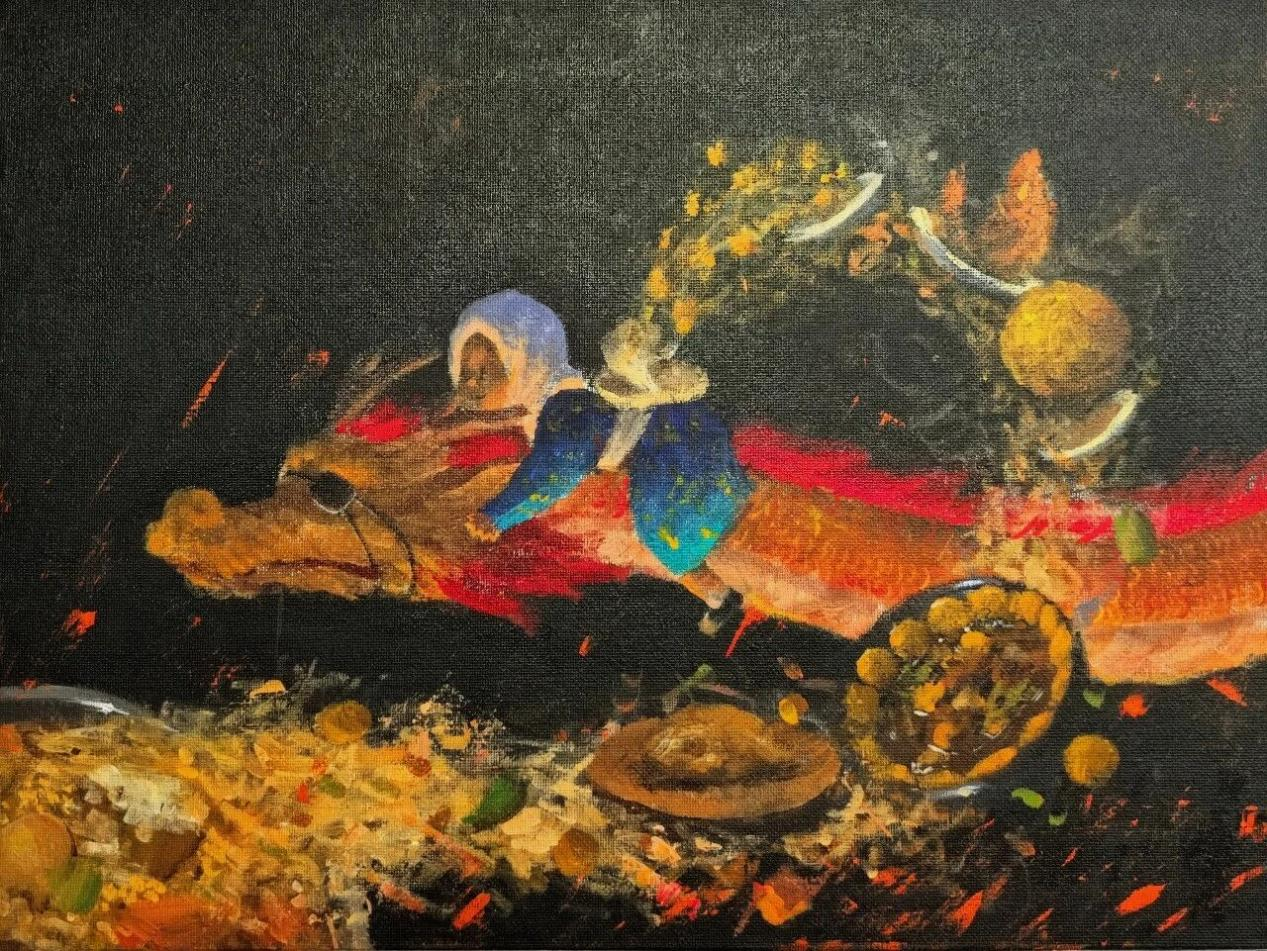
Zhao Lang, Class 241

Sha Mo, Class 243

Liang Jiayue, Class 243

Zhang Ruihan, Class 243

Jing Yilan, Class 245

He Qianru, Class 241
About the Film

Directed by Wen Muye, Once Upon a Time in the Middle East is set in the Middle East during the period of conflict around 2003. The film follows Xu Fu, a Chinese chef played by Shen Teng, who travels abroad to run a restaurant called the Dragon Restaurant in an attempt to repay his debts. There, he encounters Ma Junsheng, the restaurant manager played by Jiang Qiming; Saif, a local teenager played by Omar Sharif; and a cast of other characters.
When war breaks out, the restaurant transforms from a place of livelihood into a refuge. Through the simple act of preparing and sharing meals, Xu Fu protects a group of war orphans, using the warmth and bustle of the kitchen to stand against the gunfire beyond its windows.
Released in mainland China on August 11, the film had grossed more than RMB 2.356 billion by noon on October 7, ranking second at the mainland Chinese box office for 2026. It has also been released in markets including Hong Kong and Macao, Australia and New Zealand, Malaysia, Singapore, and Japan.
 News: The first Chinese Architecture Exhibition in history at the Museum of Modern Art (MoMA) in New York