Recently, the final judging for the “Culture Mirror” International Design Competition, initiated by École Intuit Lab, a leading institution for visual design education in Paris, was completed. Faculty and students from the School of Experimental Art and Technology at the Central Academy of Fine Arts (CAFA) participated in the project, joining young creators from France, Russia, India, Brazil, and other countries in exploring classic films and cross-cultural visual communication through creative practice.
The project was coordinated and organized by the CAFA Global Center, with Associate Professor Qi Zhenfrom the School of Experimental Art and Technology serving as the faculty advisor. A total of 15 undergraduate and graduate students from the School participated in the project. After multiple rounds of selection, Li Baiyan, a master's student at the School of Experimental Art and Technology, stood out from the entries and was selected as one of the five final winners.
Art as a Medium for Cross-Cultural Dialogue among Young Creators from Five Countries
In October 2025, the three international campuses of École Intuit Lab joined hands with CAFA and the HSE Art and Design School of the National Research University Higher School of Economics (HSE University) in Russia to launch the “Culture Mirror” International Design Competition. The project brought together young creators from China, France, Russia, India, and Brazil to engage in cross-cultural dialogue and creative practice through art.
Centered on the cross-cultural reinterpretation of classic films, the project invited each of the five participating countries to select five films representative of its own cultural context, creating a diverse collection of 25 films. The films were then cross-assigned to students from other countries. Participants were encouraged to approach unfamiliar cultural contexts from the perspective of the “Other.” Through research into the films’ historical backgrounds, cultural meanings, humanistic values, and visual symbols, they reinterpreted and creatively translated the classic works by combining their own cultural experiences with contemporary visual languages.
The resulting creative proposals covered a range of dimensions, including brand strategy, logo and visual identity systems, posters, social media communication, and moving images. By integrating film studies, cultural studies, visual design, and international communication, the project encouraged young students to consider how a culture can be understood and communicated when it enters a different cultural context: How can its underlying spirit be understood while simultaneously establishing cross-cultural resonance through new visual languages?
CAFA Faculty and Students Engage in Cross-Cultural Creative Practice
Coordinated by the CAFA Global Center, the School of Experimental Art and Technology formed a project team of 15 undergraduate and graduate students, with Associate Professor Qi Zhen serving as the faculty advisor.
Following the launch of the project, Associate Professor Qi Zhen organized group discussions around the competition theme, guiding students in understanding the social and cultural contexts, cinematic languages, and visual traditions of different countries. During the creative phase, he provided one-on-one guidance based on the individual films selected by the students.
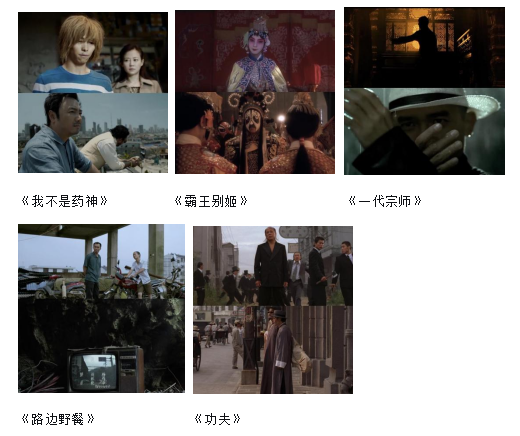
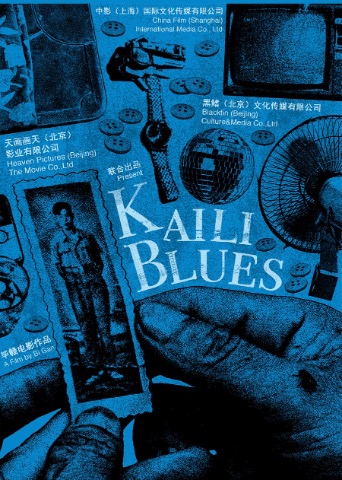
The five films selected by the Chinese side were Dying to Survive, Farewell My Concubine, The Grandmaster, Kaili Blues, and Kung Fu Hustle. Together with the representative films selected by France, Russia, India, and Brazil, these Chinese films formed the foundation for the cross-cultural creative practice, inviting young students from different cultural backgrounds to reinterpret and visually translate them.
At the same time, CAFA students were also required to engage with cultural texts from other countries. Through preliminary research, cultural analysis, concept development, and visual experimentation, they approached unfamiliar cultures from the perspective of their own cultural experiences, seeking visual languages capable of facilitating dialogue and resonance amid cultural differences.
From Cultural Understanding to Visual Translation
In the winter of 2025, the project entered an intensive creative phase. Participants conducted cultural research centered on their selected films, examining their historical, social, cultural, and emotional contexts. They identified key themes, visual symbols, characters, and narrative structures, and subsequently developed strategies for cultural translation and brand conceptualization. Based on their respective proposals, students then developed logos, color systems, typography, and broader visual and editorial languages.
The project featured multiple rounds of international evaluation. The first round of judging took place on March 10, 2026, focusing on the relationship between the visual identity system and the spirit of the film, the readability and adaptability of the design, the coherence of the overall visual world, and the participants’ ability to creatively reinterpret the films from a contemporary perspective rooted in their own cultural contexts.
On May 21, the project entered its second round of evaluation. In late June, three works from each country advanced to the next stage. On July 16, faculty advisors from all participating institutions joined the final online judging. Following a recusal principle, advisors did not evaluate works submitted by students from their own countries. Ultimately, five winners were selected, one each from China, France, Russia, India, and Brazil.
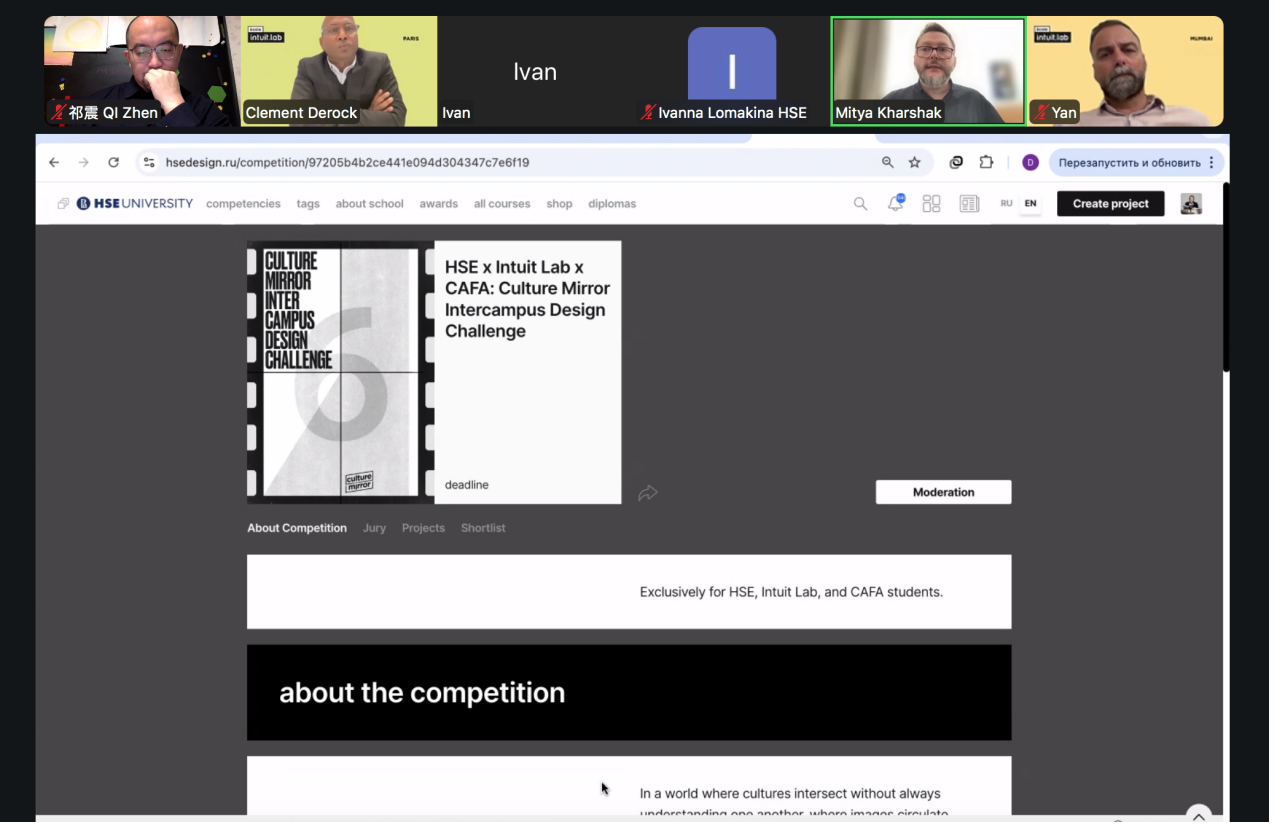
Judges from the participating countries conduct the final online evaluation
CAFA Student Li Baiyan Selected as One of the Five Final Winners
Li Baiyan, a master's student at the School of Experimental Art and Technology, CAFA, was selected as the Chinese winner with her project “Nán qiāng běi diào (南腔北调)”. She joined four other young creators from Brazil, France, India, and Russia as one of the competition’s five final winners.
Li Baiyan chose the French film Bienvenue chez les Ch'tis as the subject of her project. The title “Nán qiāng běi diào”, the pinyin romanization of the Chinese idiom “南腔北调,” refers to the differences between regional speech and accents in China. In the context of the film, she used the phrase to respond to its humorous portrayal of regional differences between northern and southern France, while making “inclusiveness and understanding” the central theme of her proposal. Drawing on friendly and approachable bird imagery as her visual motif, and incorporating contemporary internet culture and visual communication methods, she developed a visual brand with emotional warmth and strong potential for communication.

In addition to Li Baiyan, the final winners included Heloisa Marinho from Brazil, Pesnelle Alyx from France, Alannah Vaz from India, and Alisa Pokrovskaya from Russia. Drawing on their respective cultural backgrounds, the five young creators responded to classic films from different countries through design, collectively presenting diverse perspectives among a new generation of young creators on cultural difference, identity, and cross-cultural communication.
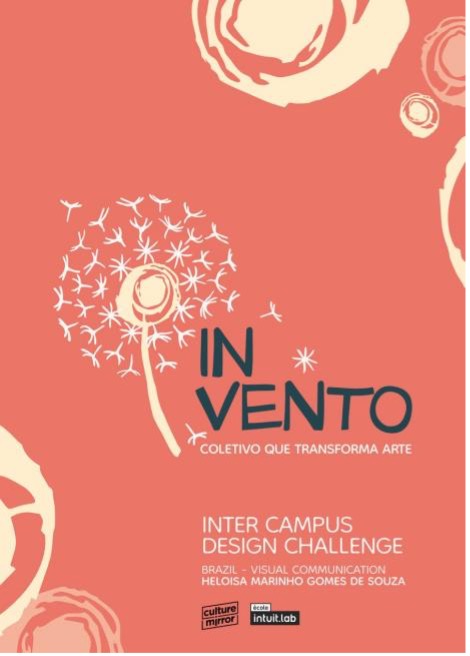
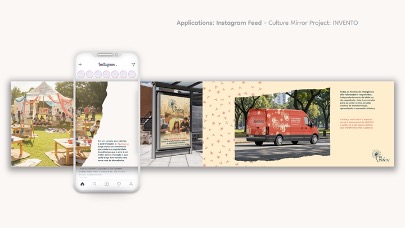
Heloisa Marinho

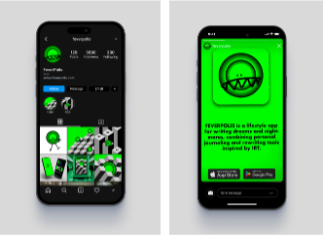
Pesnelle Alyx


Alannah Vaz
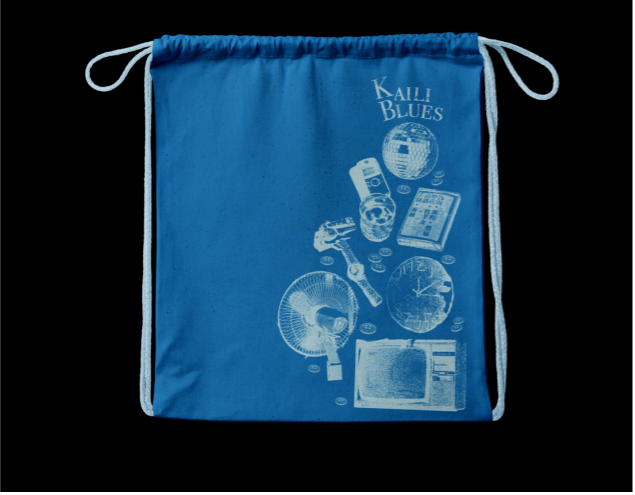
Alisa Pokrovskaya
Fostering Mutual Understanding among Civilizations through Youth Creativity
The “Culture Mirror” project is not only an international design competition, but also an educational practice in cross-cultural exchange driven by youth creativity. By using classic films from different countries as cultural texts, the project encourages young students to actively enter unfamiliar cultural contexts. Through research, understanding, translation, and recreation, participants are invited to rediscover their own cultures while viewing and interpreting those of others.
From preliminary cultural research and faculty guidance to multiple rounds of international evaluation, the project organically integrates cultural communication, art education, and creative design. Young creators from the five participating countries draw on their distinct cultural backgrounds and respond to cultural narratives from different countries through contemporary visual languages, making design an important medium for connecting diverse cultural experiences and fostering dialogue among young people. As noted in the project materials, the initiative also serves as an international platform connecting cultural communication, art education, and creative design.
CAFA’s participation in the “Culture Mirror” International Design Project represents a valuable exploration of ways to encourage young students to engage in international art and design education, while expanding opportunities for international learning and creative practice. Through collaboration with faculty and students from institutions in different countries, CAFA students broadened their cultural horizons and deepened their understanding of cross-cultural communication in an authentic international collaborative context, while contributing to international dialogue among young artists through their own professional practice.
The CAFA Global Center will continue to leverage its role as a platform for international exchange, actively expanding collaboration with leading art institutions and cultural organizations around the world. It will provide faculty and students with more diverse and practice-oriented opportunities for international exchange, enabling young artists to broaden their global perspectives and enhance their creative capabilities through cross-cultural dialogue and mutual learning among civilizations, and to promote understanding and communication between different cultures through art and design.
 News: The first Chinese Architecture Exhibition in history at the Museum of Modern Art (MoMA) in New York